Chris Paul draws flop warning from NBA

Leave a comment

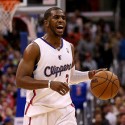
Chris Paul’s egregious flop against DeMarcus Cousins has earned him an official warning from the NBA.

Paul became the 16th player to be warned or fined under the league’s new anti-flopping rules, which draw a $5,000 fine upon the second offense. 

Bernucca: Why are Warriors the NBA’s biggest surprise?

6 Comments

The best team flying under the radar has two rookies in its starting lineup. But it’s not the Charlotte Bobcats.

It is missing its oft-injured big man. But it’s not the Philadelphia 76ers.

It has All-Star candidates at point guard and power forward. But it’s not the Los Angeles Clippers.

It is an original NBA franchise that has not won a title since the 1970s. But it’s not the New York Knicks.

Pages: 1 2 3 4

Heisler: Crimes, Misdemeanors and Flops

Leave a comment

Take flopping, please.

Happily for the NBA, it’s going away, even if the league will pay a higher cost than it knows from crime-and-punishment headlines, stemming from David Stern’s decision to make it a crime, not a basketball play, punishable by huge fines.

How hard would this have been:

Tell the referees to make defenders be stationary for a count, not an instant.

What’s the hard part? Tie goes to the offensive player, as it does to the runner in baseball.

Unfortunately, nothing is easy among commissioners these days, drunk with the new Authoritarian Chic.

A directive to the referees wouldn’t let NBA officials run this project from the league office in New York, issuing ringing denunciations like Stu Jackson’s “Flops have no place in our game.”

I hope this isn’t really a surprise to Stu, who was a coach and GM, but their game is all about flopping.

It’s not just defenders who are acting to fool the referees.

Offensive players act even more, making the merest touch look like an axe murder with accompanying noises to fool the referees into letting them shoot free throws.

Everything on offense is set up to get players open shots, or, better yet, “get to the line.”

Of course, Stu is just mouthing the house line. The NBA is run by lawyers, and not low-key ones like Walter Kennedy, the former mayor of Stamford, Conn., or former NFL Commissioner Paul Tagliabue, but ferociously proactive ones like Stern.

In the NBA’s dark early days of the New Millenium, it was Stern’s thankless task to defend his league’s integrity against “fix” charges involving not his own coaches and players—but one wayward referee.

Now Stern has come to view all problems as threats to his painstakingly-nurtured order, requiring criminal sanctions.

Unfortunately, even when Stern is right, the league pays a price for the big stick he brandishes.

(RELATED: Who is the NBA’s biggest flopper? Vote here)

While doing away with fighting, a real accomplishment, Stern’s anal commitment to rules against tiptoeing an inch off the bench ended several teams’ seasons (see: 1997 Knicks, leading Miami, 2-1, in a best-of-five before so many of them and the Heat were suspended after the no-biggie Charlie Ward-P.J. Brown fight, players had to sit out in shifts; 2007 Suns after the suspension of Amare Stoudemire in the series against San Antonio that was 2-2, going back to Phoenix).

While fighting disappeared, the memorable, headline-grabbing headlines from otherwise forgettable incidents led to a perception the NBA has more fights than ever (see: the 2006 Knick-Nugget “fight”–one punch and a lot of milling around–which prompted 47 games of suspensions, 15 for Carmelo Anthony).

Stern’s players could be a major inconvenience, the more so as the NBA’s ‘90s zenith moved swiftly into the worst of times in the Auburn Hills riot where players punched out fans, amid myriad incidents like one in which Indiana’s Stephen Jackson broke up a fight outside a bar involving teammates by firing his pistol in the air.

The sturm und drang may explain Stern’s effort to exert ever greater control, like Lt. Scheisskopf in “Catch-22,” musing about attaching eyelits to his soldiers’ wrists to wire them precisely into formation in parades.

Aside from breaking new ground in suspensions, Stern’s overreach included the new synthetic basketball he introduced, featuring Spalding’s “Cross Traxxion technology,” which—surprise!–the players hated and was withdrawn by December, and the dress code the players—surprise!–hated and defied.

Of course, the NBA is now relatively lucid compared to Roger Goodell’s NFL, with the new hot dog of the commissioners announcing ever more draconian penalties for indiscretions he blew up into major scandals from Spygate to Bountygate to Replacement Officialsgate.

Not that Goodell is power-mad, but after decapitating the New Orleans Saints’ leadership, and ultimately their season, he showed he was a merciful commish by allowing Sean Payton to watch Drew Brees set his touchdown-pass record… on the condition the suspended coach sat in a “private area” and had no contact with the team.

Stern, whose teams don’t average $38 million profits, as Goodell’s do, is actually entitled to some attitude. Embattled as Stern has been in recent years, he’s sure to be remembered as the NBA’s Pete Rozelle when he’s gone.

I feel obliged to note this every time I express horror at something Stern does in the days since he dropped the persona he called “Easy Dave” and turned into Judge Dredd.

This is basketball, NBA-style: Here come da judge.

(RELATED: NBA’s anti-flopping rules are a flop, columnist Brian Geltzeiler writes)

Mark Heisler is a regular contributor to SheridanHoops, LakersNation and the Old Gray Lady. His power rankings appear every Wednesday during the regular season, and his columns and video reports appear regularly here. Follow him on Twitter.

Geltzeiler: New flopping rules are a flop

5 Comments

Jeff Van Gundy is my NBA idol.

I like to joke that Jeff is to me what Justin Bieber is to a teenaged girl.

If Jeff was a cult leader, I’d not only join, I’d drink Jeff’s Kool-Aid in the jungle. The only topic I’ve ever vehemently disagreed on with Jeff is flopping.

Jeff has been condemning flopping on national NBA broadcasts, on the biggest of stages, for years now.  The league has gotten embarrassed enough to finally do something and boy, is it a mess.

The same people who were shameless enough to bring you the NBA lockout are now so embarrassed by flopping, that they’re unilaterally enacting rules that threaten to change some fundamental aspects of how the game is played. And the players’ union and individual players themselves are not happy about it.

(RELATED: Who is the NBA’s Biggest Flopper? Vote here.)

With the announcement earlier this week of new rules being instituted, the NBA is opening up a Pandora’s box that may not be so easy to close up by instituting a fine system for flopping with an eventual discretionary punishment for six-time offenders and an open-ended definition of what constitutes flopping.

What’s worse is that the league is threatening to penalize and adversely effect some of its more productive players.  The top 5 players who are affected by the new flopping rules are as follows.

manu1. Manu Ginobili -  Ginobili has made flopping an art form.  He is an excellent player who combines ability, tenacity, and a knack for garnering every little advantage he can. One of those advantages is his ability to sell the referees on a call they may or may not have made.  So, are we to believe that every time Ginobili goes in for a layup and falls down, which happens 3-5 times ever game (at a minimum), the NBA powers that be are going to study tape to figure out when he falls and when he flops?  That sounds dumber each time I write it.

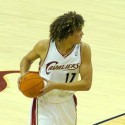
Anderson Varejao2. Anderson Varejao – The Brazilian forward has made himself an effective player in the league through superior effort and cerebral play on defense and on the glass. Varejao is very good at drawing fouls, which belies his effectiveness.  One of the reasons that Varejao is so good at drawing fouls is because he’s an accomplished flopper.  He throws his head around just enough with his huge mop-top of curly hair that makes it appear as though he’s getting hit much harder than he is.  This may not be aesthetically pleasing to look at, but it’s not exactly threatening the quality of the NBA’s product either.  There’s no reason to legislate against Varejao or his hair.


Shane Battier of the Miami Heat3. Shane Battier- Battier disguises flops better than anyone.  At this stage of his career, he provides hustle, defense, leadership and some 3-point shooting.  One of the best things he does on the hustle side is his exceptional ability to draw charging fouls.  Battier does that because he is an all-world flopper.  Most of his flops aren’t obvious at all.  Battier is a guy who is going to be watched for his intent on falling to the ground while drawing a charge.  He is a great example of how badly these rules are flawed.  Somehow, Commissioner Stern believes that he and Stu Jackson are uniquely qualified to measure a guy like Battier’s intent when he falls to the ground.  The answer of ‘I’ll know it when I see it’ doesn’t hold water.  Many times on video, it’s difficult to determine the amount of force contained in player contact.

4. Luis Scola – Scola is a very good offensive player. He is not a good defender. Some folks, who are less kind than I am, would refer to Scola as a turnstile. Frankly, I wouldn’t let Scola guard the door while I’m in the men’s room.  The one weapon he uses effectively on defense is his ability to draw an offensive foul.  He’s not a great flopper, but he’s a serial flopper.  Nonetheless, it’s effective.  The big question with Scola is will his reputation precede him.  Is Stu Jackson going to be more likely to fine a guy on this list because they’re known for being floppers?  What if he’s successful in fooling an official but Jackson decides he saw a flop on film?  Tricking referees is a time-honored tradition is sports.  The next thing we’ll know, the league will outlaw the backdoor play because it’s not fair to pass the ball while the defender isn’t looking.


5. Chris Paul – Paul is unquestionably, IMHO, the greatest point guard in the game on both ends of the floor. Beyond his athleticism and elite skill is a craftiness that garners him consistent marginal advantages that build up over the course of a game. Part of this collective advantage he accumulates has to do with his ongoing effort to draw offensive fouls. Paul will often pressure the ball in the backcourt and attempt to draw a foul by beating a ball handler to a spot, creating contact and exaggerating it in an attempt to attract the referee’s attention. This was always considered gamesmanship and now it’s become an offense punishable by a fine because David Stern and his merry minions think this is unpleasant for his fan’s to look at. It’s kind of like Roger Goodell outlawing the play-action pass in the NFL because it’s too hard for the officials to figure out who has the ball.

Who do you think? Again, you can vote in our flopper poll, or leave a comment.

The league issued an official statement on what is considered a flop complete with video examples of what is to be considered a flop.  The guidelines are right here.  Frankly, reading the league’s definition of what they constitute a flop only muddies the waters.

The definition itself is troublesome: “A “flop” is an attempt to either fool referees into calling undeserved fouls or fool fans into thinking the referees missed a foul call by exaggerating the effect of contact with an opposing player.”

The NBA is essentially going to take money from players’ pay because they have no confidence in their referees’ ability to distinguish between a legitimate foul and a manufactured one.  Furthermore, the NBA doesn’t want players fooling the fans either so they don’t get mad at the referees.  For years, at all sporting events of all kinds in all countries, in another time-honored tradition, fans will yell at referees and get angry with them.  The NBA is going to institute punishment toward their players because they’re doing things in the course of an NBA game that are making the paying customers mad at the officials, who coincidentally, the fans are not there to see.  I think that Stern and the referees need to spend some time in couples’ therapy.

The next paragraph of the official league flopping doctrine reads as follows …

“The main factor in determining whether a player committed a flop is whether his physical reaction to contact with another player is inconsistent with what would have been expected given the force or direction of the contact. For example, a player will be considered to have committed a “flop” if he falls to the floor following minimal contact or lunges in a direction different from the direction of the contact.”

This part is more vague than the concept of destiny.

First of all, it is next to impossible to objectively evaluate the degree of force between two players who collide by looking at the collision on replay.  The league’s brass not only believe they can do this, they believe that they can establish an expected reaction and evaluate the consistency of that expectation as compared to the alleged flop.

This paragraph is so abstract, there is absolutely no doubt that these flopping rules are going to be applied in the most arbitrary of fashions. The rules have given Stu Jackson and his staff an impossible to measure standard to apply to measure the intent of an individual player.

The part that really exacerbates the difficulty in practically applying in an objective fashion is the accompanying video the league attached to the memo announcing the new flopping rules.  This video shows several examples of perceived flopping that the league prohibits.

If I were one of the players who got used as an example, I would be more than a little concerned that I was being targeted.  It’s one thing to be targeted by officials on the court, but to be targeted by the league financially over impossible-to-measure intent is extremely unfair.

The other really troublesome part of this video is that I have legitimate difficulty distinguishing between what they consider a flop and what is allowable embellishment.

According to the video, I am to believe that Danilo Gallinari falling to the ground after accelerating into Pau Gasol’s shoulder bone is a flop as he writhes in the ground in pain but Randy Foye throwing his body backwards on mild contact to take a charge is “an acceptable level of embellishment.”

The point the league is missing, which is apparent in every example they set forth, is that when a player flops and is not successful in drawing a foul, that player has taken himself out of the play.

Either the player is getting beaten down the floor in transition because he has to pick himself up off the ground or the play is going on around him while he’s trying to get up.  Regardless, the unsuccessful flop has put the flopper’s team at a disadvantage.  The bottom line is that if the officials work on calling these plays correctly, there’s no legislation necessary.

When I was 14 years old and going into my freshman year of high school, my father sent me to Al Lobalbo’s basketball camp at the Peddie School in Hightstown, NJ.  Al Lobalbo was Louie Carnesecca’s long-time lead assistant at St. John’s University.  Al had a storied career in New York/New Jersey metropolitan area basketball, detailed here in his 2002 obituary.

Lobalbo and my father had a relationship through New Jersey basketball circles that went back to the late 40’s.  For this reason, Lobalbo took a particular interest in this not-so-tall, lanky freshman with a head of curly hair that made him look like a Q-tip.

Lobalbo stopped a scrimmage during camp one day to show me, in front of all the seniors, the fundamental elements in drawing a charge effectively.

He taught me that your shoulders had to be square, your feet had to be stationary, and as soon as you felt contact, fall backward immediately to sell it to the official.  Somewhere along the way, selling a call to an official has been equated to tricking him.

Flopping doesn’t need to be eliminated or even discouraged.  It needs to be identified and ignored.  Any other action regarding flopping puts the NBA on a slippery slope and changes fundamental aspects of how the game is played.

Brian Geltzeiler is the executive producer and co-host of soon-to-launch SheridanHoops radio. He is the editor of hoopcritic.com. His father, Burt, was an elite college basketball player for Newark Rutgers in the late 40′s and was drafted by the Tri-City Hawks (now Atlanta) in 1950 by their GM Red Auerbach. You can follow Brian, who lives in Livingston, N.J. with his wife and 4 children, on Twitter.

Who is the NBA’s biggest flopper?

3 Comments

Cast your vote, and the percentage results will be displayed after your ballot is cast.

Thanks for taking part, and feel free to vote in our other three open polls (the results of those have been quite interesting):