March Madness: NBA Draft Consequences

1 Comment

NCAA_logo.svgThe first week of the NCAA Tournament is in the books, and one thing is clear — the draft stock of many of the top players did not improve. In fact, Kentucky’s Nerlens Noel’s stock was probably helped the most of any top prospect — and he was unable to play in the NIT because of a torn ACL.

But there were certainly others who helped themselves.

Pages: 1 2 3

NCAA Tournament Day Four: Stars Of The Day

Leave a comment

ncaaIf the second half of the Round of 32 is anything like the first then there will be approximately zero people still interested in their brackets come the Sweet Sixteen next week. 

Bernucca: “Don’t Put Me In, Coach” is a terrific view from the bench

Leave a comment

Mark Titus and I have three things in common.

One, we both write about basketball much better than we play it.

Two, we both rely on sarcasm as the basis for our attempts at humor.

Three, we both are fascinatingly enthralled by “trillions.”

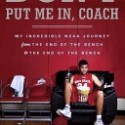
Titus is the author of Don’t Put Me in, Coach, a wonderful inside look at big-time college basketball through the cockeyed view of a benchwarmer. On the inside flap is a review from former Boston Globe columnist Leigh Montville that begins, “If Mark Titus had been able to play basketball the way he can write, he would have joined his Ohio State teammates in the NBA.”

While that may be true, it also would have significantly devalued the book, because there is no way Titus would have had the time, impetus or commitment to make Don’t Put Me In, Coach as enjoyable a read as it is.

During his AAU days and four years at Ohio State, Titus played with no less than seven current NBA players, a list that does not include Greg Oden, whom he affectionately refers to as “possibly the whitest black man to ever live.”

Titus tells the tale of Oden skipping his senior prom because it had, as Oden said, “too many black people” and for blowing off an Ashanti concert to attend a magic show with Titus and his father. He also regales us with the time Oden stalked him with a Nerf dart gun – which he carried almost everywhere he went – and moistened one of the darts with his mouth after it had been on Titus’ scrotum.

This is what Titus does – and does very well – throughout the book. He gives us considerable insight to the personality and character of a teammate through humorous anecdotes and occasionally puts the cherry on top of the cupcake in the form of a wiener joke. This was a chronicle of his college days, mind you.

While many of his teammates were using Ohio State as a mere weigh station until entering the NBA and consumed by playing basketball, Titus was doing just the opposite. His turned his days in Columbus into a personal four-year challenge to see how little he could be a part of the team while remaining a part of the team.

On various occasions, the former team manager and walk-on (a) left practices to play video games under the guise of using the bathroom; (b) left the bench during games to actually use the bathroom; (c) intentionally avoided the ball when inserted in garbage time in his quest for a “trillion”; and actually had the nerve to tell coach Thad Matta that he did not want to enter the final minutes of a blowout.

That moment ultimately became the book’s title and shed some light on Matta, whose sole reaction of bemusement proves that – unlike many of his peers – he has the temperament to coach at the next level.

It is hard to imagine any coach of a perennial powerhouse to dismiss a player’s refusal to enter a game without giving it a second thought. Most would make a mental note to prevent that kid from playing for the rest of the season, in a misguided, heavyhanded attempt to reinforce his authority. Some would even go as far to throw the player off the team, believing the kid should be eternally grateful for any scrap the coach’s almighty program throws him.

This doesn’t even factor in Titus starting a blog entitled Club Trillion that gave readers an inside look at OSU hoops during his junior and senior seasons. Could you imagine a control freak such as Mike Krzyzewski or a scream machine such as Frank Martin allowing that to exist?

But Matta’s understanding of how little things so often have no impact on the big picture makes him a player’s coach – a rarity in the college game. It also makes Titus’ book that much better, because he knows he can tell a story with impunity.

And Titus can write – certainly much better than former OSU teammate and current Oklahoma City Thunder guard Daequan Cook, who received a “big red 0%” on an English paper with this note from the instructor: “It’s obvious that you didn’t read the book and had no understanding of what was expected with this assignment. Your entire paper discusses things that are irrelevant for this assignment and this class.”

So much for the priorities of the student-athlete at The Ohio State University.

Titus has no such problems. His comparative humor – especially relating to pop culture – is outstanding. When he writes, “The key to success against VMI is to have a team full of good ballhandlers in excellent physical condition,” he quickly adds, “Coincidentally, that is also the key to running a successful brothel.”

So is his use of simile, which are countless. He recalled one postgame celebration where Oden disregarded him “like I was a condom and he was Shawn Kemp.”

Titus fully understands humor, which is supposed to have no boundaries and the potential to offend everyone and their grandmothers. He constantly pokes fun at the racial lines of basketball, even spending an entire chapter on delightfully being given permission to use the dreaded N-word by a black teammate. In this era of political correctness, he gives readers fair warning to skip the chapter, which actually is one of the book’s more intellectual sections.

Titus had perhaps the most interesting career of any walk-on benchwarmer in college basketball history. After OSU lost to Florida in the national title game to end Titus’ freshman year, there was an on-campus rally at which students chanted, “One more year!” imploring Oden not to leave for the NBA. In an ensuing interview, Titus assured folks he would be back for his sophomore season.

After his junior season, Titus declared for the NBA draft entirely as a joke, then was urged by the NBA to withdraw his application, exposing the dearth of humor at the executive offices of the Olympic Tower. And after leaving OSU, he had a tryout with the Harlem Globetrotters – giving himself something in common with Wilt Chamberlain – and revealed the administrative side of the lovable hoopsters as disorganized and inconsiderate.

Titus wasn’t much more than an on-campus oddity until doing a podcast with ESPN writer Bill Simmons that drew attention to Club Trillion. He is not the only web scribe consumed by disappearing acts on the court; Basketbawful has been at it for a while, and my Sunday column has a Trillion Watch.

But Titus takes the “trillion” – a boxscore line of any amount of minutes followed by all zeros – to an art form, using an entire chapter to explain how, for lack of a better phrase, to become a trillionaire.

Here’s some of Titus’ tidbits on other current and former NBA players with whom he crossed paths while at OSU:

Greg Oden: The former Blazers center was a generally good guy, although after the title game loss to Florida told a teammate, “It’s only a game. Stop crying like a little bitch.”

Joey Dorsey: Prior to a Memphis-OSU tourney matchup, Dorsey made clear he had no understanding of the David and Goliath fable, likening himself to Goliath and Oden to David. Pretty much what you’d expect from someone who has thrown punches at players, fans and innocent bystanders during his journeyman career.

Joakim Noah: According to Titus, the Bulls center is “the greatest women’s basketball player of all time.”

Kosta Koufos: Recently called “Cous Cous” by TNT’s consistently underprepared Charles Barkley, the big man of the Denver Nuggets spent his lone season in Columbus alienating virtually all of his teammates by being a ballhog who was only concerned with his NBA career.

Evan Turner: Dubbed “The Villain” by Titus, who also described the current Sixers swingman as “insecure, socially feebleminded and possibly bipolar.” Turner often dribbled in front of a locker room mirror wearing nothing but his sneakers. He spent three years at OSU constantly at odds with Titus, who conspired with Matta to make Turner lose his marbles over throwing a bounce pass during a free-throw drill.

I’m among the few folks who find the college game remarkably boring. My scant free time doesn’t allow for much reading. And this is my first book review. But if you are a hoops fan, Don’t Put Me in, Coach is certainly worth the trip.

Now where’s the free Club Tril T-shirts, Mark?

To order a copy of “Don’t Put Me In, Coach” through Amazon.com, click here.

Chris Bernucca is a regular contributor to SheridanHoops.com. His columns appear every Wednesday and Sunday. You can follow him on Twitter.


Scouting Take: Jared Sullinger of Ohio State

4 Comments

When we last looked at Terrence Jones of Kentucky, we noted the significance of returning to school to become a more efficient offensive player. Last year, Ohio State’s Jared Sullinger made national news by deciding to forgo the draft and millions of dollars in a rather weak big man draft. His goal was to improve and to lead his team to the Final Four.

He’s done both.

What I love most about Sullinger is his combination of a strong mid-range shooting game along with sound, polished post moves and counters. He’s not the  best athlete in the world, but his footwork is outstanding. That allows him to move around defenders and sneak shots through the hoop.

When you look at Sullinger’s supporting cast you appreciate what he should be able to do at the next level.

Ohio State as a team is 35th in the nation in assists and are 12th overall in field-goal percentage with Sullinger leading the team at 53%. This tells me that Sullinger forces defenses to help on the block, and that leads to a tremendously effective inside-out game. At the next level, however, if Sullinger isn’t surround by shot makers then you can defend him with a more athletic power forward who can force Sullinger to face up without having to double.

Speaking of facing up, again, that’s my favorite part of Sullinger’s game. He shoots the mid-range efficiently and reminds me of a young Kurt Thomas, one of the most underrated pick-and-pop players over the last 20 years in the NBA. Thomas was automatic from 15 feet from elbow to elbow. If you pair Sullinger with another really sound post player and an explosive poing guard you have a dynamic scoring presence from several spots on the floor.

Another advantage to coming back for his second year? Extended range. Last year Sullinger wasn’t an effective 3-point shooter, making 25% in minimal attempts. This year, and especially during this Final Four run, Sullinger has stepped out and knocked down long jumpers when necessary. He’s 3 for 5 this tournament.

Defensively, Sullinger’s footwork allows him to defend quick players face up, but he’ll have to work on his lateral speed in order to defend face up players. On the post he has the size to defend the 4 and 5 and is a plus rebounder in terms of positioning and angles.

A pretty complete player last year, Sullinger, like Jones, benefited from his sophomore campaign and improved his stock for June’s draft.

Strengths:

- Most complete post player in the nation.

- Has a fantastic shooting touch from 15-18 feet.

- Efficient, efficient, efficient. And makes teammates better with his passing.

- Physically able to take post pounding and finish from the free throw line.

Weaknesses:

- Not a plus athlete.

- Ballhandling.

- Trouble scoring over length.

- Defending length and lateral quickness.

Tommy Dee is the founder of TheKnicksBlog, editor of CHARGED Magazine and is a regional scout for Marty Blake and Associates. Follow him on Twitter.


Zagoria: NCAA Tournament: Whose Stock is Rising?

3 Comments

NEW ORLEANS — Here in The Big Easy for the NCAA Final Four, there are a slew of future NBA lottery picks set to take the floor Saturday night at the SuperDome.

Four of the projected top six picks on DraftExpress.com’s Mock Draft and five of the top 12 play for Kentucky, Kansas and Ohio State. (Louisville is the lone Final Four representative without a projected lottery pick.)

Numerous other players no longer in the NCAA Tournament have also helped their stock since the Madness began.

Here’s a look at some top prospects who are here, and some who aren’t.

Top 5 NBA Prospects in the Final Four:

1. Anthony Davis, F, Kentucky

The presumptive No. 1 pick in the NBA Draft, Davis was named the U.S. Basketball Writers National Player of the Year. He impacts the game on both ends of the floor and his offensive game is coming along nicely. Davis has had three double-digit scoring games in the NCAA Tournament, including an 18-point, 11-rebound outing in the rout of Baylor.

2. Michael Kidd-Gilchrist, F, Kentucky

Though Kidd-Gilchrist previously said he would return to school for his sophomore season, reports recently surfaced that he would come out. And why not? He’s projected as a Top 3 pick. A tremendous transition and inside player, the former St. Patrick star needs to develop his perimeter game.

3. Thomas Robinson, F, Kansas

The latest Kansas big man to follow in the footsteps of recent college successes Cole Aldrich and the Morris twins, Robinson projects to be a better NBA player. He’s more physical, rebounds well on both ends and has been the heart and soul of this undermanned Kansas team all year.

4. Jared Sullinger, F, Ohio State

After choosing to remain in school following a freshman season in which he could’ve been a lottery pick, Sullinger has the Buckeyes back in the Final Four for the first time since 2007, when they lost in the championship game to Florida. A big, strong, skilled post player, he and fellow forward Deshaun Thomas form a deadly 1-2 punch that will be on display against Robinson and Kansas center Jeff Withey.

5. Terrence Jones, F, Kentucky

The knock on Jones is that he doesn’t always play hard and his stock has dropped somewhat over the course of the season. But there’s no denying his talent level, and when he decides to play hard he’s one of the best forwards in the college game. He has all the tools necessary to play in the NBA, but questions linger over his commitment level.

Five Players Whose Stock Has Risen in the Tournament:

1. Bradley Beal, G, Florida

A potential lottery pick, Beal has great upside and can rebound well for a guard. NBA scouts love his handle and his ability to play-make in the halfcourt. He has 3-point range but can also get to the basket.

2. Royce White, F, Iowa State

A skilled point/power forward, White went for 23 points and 9 rebounds in third-round loss to Kentucky. NBA scouts like his skill set but feel he has to develop a more consistent jump shot and free throw.

3. C.J. McCollum, G, Lehigh

The 6-3 combo guard has declared for the draft but has not hired an agent. He is projected as a mid- to late-second round pick but NBA scouts see him as a scorer who can attack off the dribble. ”When his career is done at Lehigh, he will go to the NBA and help some team win,” Lehigh coach Jeff Jones said.

4. C.J. Leslie, F, N.C. State

Projected as a second-round pick, Leslie is an athlete who rebounds and will be effective in an uptempo style where he can use his athleticism. Leslie is also effective from 15 feet and in attacking the basket off the dribble.

5. Jae Crowder, F, Marquette

The Big East Player of the Year is a tough, physical forward who plays with energy on both ends of the floor. He is projected as a late second-round pick. Marquette finished second in the Big East to Syracuse this year.

Adam Zagoria of Zags Blog covers the future stars of the NBA for SheridanHoops.com. Follow him on Twitter at @AdamZagoria.