Olympics: Argentina beats Brazil 82-77 as Varejao sits

Leave a comment

Ruben Magnano coached a game that made all of his fellow Argentinians happy.

Problem was, Magnano was coaching Brazil.

Magnano made the curious decision to sit Anderson Varejao for the entire fourth quarter, and Argentina held off a strong fourth-quarter run by Brazil and defeated their South American rivals 82-77 Wednesday in the quarterfinals of the 2012 Olympics.

Magnano, who coached Argentina to a gold medal at the 2004 Olympics in Athens but then had a falling out with the national federation, was not solely to blame. Unable to make proper use of their size advantage, the Brazilians played small in the final quarter and were undone throughout the game by their horrific 3-point shooting (5-for-20 through the first 39 minutes) and nearly-as-horrific free throw shooting (12-for-24, with Splitter going 3-for-8.)
Leandro Barbosa and Marcelinho Huertas led Brazil with 22 points apiece, but Alex Garcia committed a key offensive foul when he charged into Manu Ginobili on a fast-break with 52 seconds remaining and Brazil trailing 74-71. (Some might say it was a 50-50 call, but Ginobili appeared to get back and set up his defensive stance cleanly before Garcia ran into him.)

Ginobili, who scored 16 points, made both free throws for a five-point lead.

Argentina scored four points from the foul line in the next 21 seconds to clinch it.

(RELATED CONTENT: Spain defeats flagrant fouling France 66-59.)

(RELATED CONTENT: Russia defeats Lithuania 83-74 in Olympic quarterfinals)

Luis Scola led Argentina with 17 points, and Carlos Delfino also had 16. Argentina moves on to a likely semifinal matchup with Team USA, which played Australia in Wednesday’s final quarterfinal game.

Click here for the boxscore.


Olympics: Top 5 Olympic Questions With Pool Play Ending

2 Comments

So we’re all getting a reminder of how things are really day-to-day in the Olympics, eh?

A couple days ago, Carmelo Anthony had the new U.S. Olympics scoring record (37) and Team USA was considered unbeatable after they out Dream Teamed the original Dream Team and beat Nigeria by 83.

Then we get through Day 4 of the competition, and the world has turned upside down. The single highest-scoring game now belongs to Patty Mills of Australia, who dropped 39 on Great Britain as the Boomers came back from an 10-point halftime deficit to defeat Great Britain.

Oh, and Team USA?

Not looking quite so unbeatable anymore, I’d say. When those 3-pointers don’t fall, when the defense gets its share of turnovers but can’t get stops at other times, when the rim is unprotected with Tyson Chandler (8 minutes vs. Lithuania) on the bench, the U.S. team is a structurally flawed team. There’s no getting around that fact.

One week from today, we’ll have our gold medal game.

And right now, it looks like Team USA will go up against Australia in the quarterfinals, Argentina, Spain or Brazil in the semifinals, and Russia, France, Spain or Brazil in the gold medal game (assuming they get there).

But the unexpected can happen, and Monday could be the day the tanks roll in and change everything.

So …

Before Monday’s games get underway, let’s ask 5 pertinent questions about the 2012 Olympics:

1. IS IT A CERTAINTY THAT USA AND RUSSIA WILL WIN THEIR GROUPS?

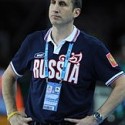
No. But it is highly probable. In Group A, the Americans will finish first even if they lose to Argentina — unless they lose by at least 110 points. The FIBA tiebreaker is point differential, and Team USA is +162 through four games. In Group B, the Russians are undefeated with one game remaining, against Australia. The line on that game is only 7, and you know why? Because Russia’s clever coach, David Blatt, could decide to become the first Israeli-American to send in the Russian tanks. And if Russia loses to Australia in Monday’s first game (3 a.m. EDT), the night’s penultimate game, Brazil-Spain, becomes a must-win game instead of a must-lose game.

2. WHY WOULD BRAZIL-SPAIN BE A MUST-LOSE GAME?

Simple. Because the loser (assuming Russia defeats Australia) goes into the bracket opposite Team USA’s bracket and would not have to face LeBron James’ team until the gold medal game. If you want to know how important it is to be on the other side of the bracket, ask Italy. In 2004, they defeated Lithuania in the semifinals and played Argentina for the gold because Argentina put on a clinic in defeating Team Marbury in the other semifinal. Italy has fallen off the basketball map since then, but they still have that silver-medal finish in 2004 in their national resume.

3. WHO POSES THE GREATEST THREAT TO TEAM USA?

The team that has been lulling everyone to sleep, or just plain sucking-but-mostly-winning — Brazil. They have the world’s best non-NBA point guard in Marcelinho Huertas, who leads the tournament with 6.3 assists (tied for 1st, actually, with Alexei Shved of Russia), they have 3-point shooters, and they have a beastly NBA front line of three NBA players — Anderson Varejao, Nene and Tiago Splitter — who can punish the Americans on the boards like no one else. In case you didn’t notice, the Americans were outrebounded (42-37 overall, and 36-24 on the defensive boards) for the first time in this tournament Saturday by Lithuania, which played small ball and used Jonas Valanciunas for a mere 9 minutes. Brazil also has a brilliant coach in Ruben Magnano, who is Argentine but is coaching Argentina’s greatest rival because of a fallout a few years back with the Argentine federation.

4. AMONG NON-NBA PLAYERS, WHO IS HAVING THE BEST TOURNAMENT?

Tough call, but the nod at this point goes to Russia’s 6-foot-5 shooting guard, Vitaly Frizdon, who scored 24 against Spain as Russia rallied from a 20-2 deficit to win Saturday, and who hit the buzzer-beating game-winner against Brazil in the tournament’s most thrilling finish to date. Frizdon plays for Khimki Moscow, where last year he was teammates with e-NBA players Chris Quinn, Sergei Monia, Zoran Plananic, Mickael Gelabele and Australia’s Matt Nielsen, who is a borderline NBA-worthy player. Khimki won the EuroCup (a notch below the Euroleague) last season. Honorable mention goes to Ike Diogu of Nigeria, who was out of the NBA last season and played in China. He is averaging 17.0 ppg, 10th best in the Olympics.

5. WHO ELSE IS OFF THE CHARTS STATISTICALLY?

Let’s start with Nicolas Batum, who is shooting an otherworldly 84.4 percent from 2-point range (he is 6-for-17 on 3s) and scoring 15.2 points per game for France, which will finish second in Group A unless Argentina defeats Team USA. Luis Scola and Patty Mills are tied for the scoring lead at 22.5 points per game, and Carmelo Anthony is fourth at 20.5 despite playing only 16.8 minutes per game. ‘Melo’s 64.4 field goal percentage leads all players, with Andrei Kirilenko (60.9), Batum (60 pct), Luis Scola (.576) and Pau Gasol (.564) giving chase. ‘Melo also leads the tournament in 3-point percentage (.636, 14-for-22).

(RELATED CONTENT: Roundup of Saturday’s games)

(RELATED CONTENT: The Lithuanian Tavern: Diary of the Uncredentialed, Edition V)

(RELATED CONTENT: Video: Lessons learned vs. Lithuania; Argentina preview)

Chris Sheridan is publisher and editor-in-chief of SheridanHoops.com. He has covered every version of Team USA since 1996, at the Olympics in Atlanta, Sydney, Athens and Beijing, as well as the World Championships in Indianapolis, Japan and Turkey. Follow him on Twitter.

Will Team USA lose at London Olympics?

Leave a comment

I am going to give you a Team USA gold-or-not prediction in this column, and I promise you a prediction that goes against the grain. That’s all I’ll say about that … for now.

First, I’ll hand over the podium and relay a quote that could be the defining declaration concerning the London Olympics:

“Let’s no longer beat about the bush. This summer’s Olympics Games are going to be a catalog of disasters. Not everything that can go wrong will go wrong. Only lots of it.”

That line was written by the editorial staff of the venerable Times of London, and it was published two weeks ago in the context of organizational difficulties, especially those related to security.

But it could be germane to Team USA if something unexpected happens.

If Ronny Turiaf commits a hard foul against ex-Lakers teammate Kobe Bryant in Sunday’s opener and it breaks a bone in Kobe’s delicate hand, the equation will have changed.

If LeBron James sprains an ankle in the semifinals and can’t play for the gold, then what?

If (when) Tyson Chander gets into foul trouble against an opponent with multiple NBA bigs, the next line of defense at the center position is Kevin Love, Andre Iguodala, James or Carmelo Anthony. All four of those guys have already played center in the Americans’ five exhibition games. What if foul trouble causes neophyte Anthony Davis to be called upon?

What if Team USA has to defend a Spanish front line of Pau Gasol, Serge Ibaka and Marc Gasol all at once, should the fickle Spanish head coach choose to play that threesome together. Then what?

“I am a beast,” a supremely confident Pau Gasol told Larry Fine of Reuters.

If the Americans have to defend Anderson Varejao and Nene at the same time, can Brazil exploit it? Maybe, because it has the best non-NBA point guard competing in London, a guy by the name of Marcelinho Huertas, who dropped 13 dimes in D.C. two weeks ago with President Obama and Vice President Joe Biden watching from courtside seats. Team USA trailed for nearly the entire first half of that game.

Coach Mike Krzyzewski went into that Brazil game thinking it’d be a good idea to have Kevin Durant coming of the bench as the sixth man. That notion was quickly abandoned, and Anthony will have that role at the Olympics. (Dwyane Wade had to subjugate his ego and take on the sixth man role four years ago for Team USA in Beijing, and he was the Americans’ most valuable player, hands down.)

Durant or LeBron James will likely be the MVP for this U.S. team. Likely. But it could be Anthony, who presents a matchup problem as a stretch 4 playing against bigs unaccustomed to going out on the perimeter to defend.

Ironically, the 4 (power forward) spot is what should be the key position for the Americans. Their only true power forward is Love, who is teetering between being an impact player as the 9th man or a towel-waver backing up Davis. The choice is his, and it depends on his mental state — as discussed here.

If Durant, James, ‘Melo, Love and Iguodala can play well on the defensive end as the rotating 4s and 5s, the victories will come easily.

If a team with multiple bigs can consistently get the ball deep into the low post, it’s trouble.

“It’s sort of a double-edged sword,” Gasol said. “You have to try to punish them at one end, then adjust at the other end. And they’re loaded, so you have to be alert at all times.”

It should be a relatively easy opening night for Team USA against France, which is a 24 1/2-point underdog. (Argentina was a 28 1/2-point underdog last Sunday in Barcelona and lost to the U.S. by just 6.)

But the French are coming with confidence even though they do not have all of their NBA players. If you throw the missing Joakim Noah, Ian Mahinmi and Rodrigue Beaubois onto Les Blues roster, they would be scary. But they try to play the same speed style as the Americans, and even with a roster of current and former NBA players Tony Parker, Turiaf, Nicolas Batum, Nando de Colo (who will play for the Spurs next season), Boris Diaw, Mickael Gelabale and Yakhouba Diawara, they are going to be overmatched.

Of course, everyone thought Puerto Rico was going to be overmatched in the opener of the 2004 Olympics against an American team that included Tim Duncan, Allen Iverson, James, Anthony, Wade and Amare Stoudemire, and we all remember what happened in Athens, right?

The Americans lost by 18 points to Carlos Arroyo and Co.

Nobody saw that coming, and although what happened in 2004 is largely irrelevant to what will take place in London in 2012, there is always some connection.

Because you never know what is going to happen in these tournaments. Every team is bound to have one bad game – even the Americans. It’s a rule of thumb in FIBA competitions that Manu Ginobili once explained to me in great detail. You can make the case that Team USA had its one bad game in Beijing in the gold medal match against Spain, when it surrendered 107 points and it was a four-point game with 3 minutes left.

That’s where the sphincter factor comes into play, and in 2008 it was Spain that tightened up in those final 3 minutes. When the game was out of reach with a minute left, the coach kicked the scorer’s table and took a technical foul. The Americans drained the two free throws, and it was over. Team USA ended up with 118 points and won by 11.

But the 225 combined points in a 40-minute FIBA game was astronomical. Again, nobody saw that high of a number coming.

That’s the thing about the Olympics: You never know.

All you can know is that the Americans’ opponents will respect them but not fear them. Ginobili and Luis Scola have already defeated Team USA before – twice, in 2002 and 2004.

Sarunas Jasikevicius has already defeated the Americans before (in 2004), and he had a shot to knock them out in the semifinals of the 2000 Sydney Olympics but was defended superbly on the final possession by Jason Kidd.

Watch this video of the tense final minute of that game if you want to see how close the Americans can come to losing against an upstart. Then read on for some background of what happened before that final shot by Jasikevicius sailed wide left.

_ Before Ramunas Siskauskas missed two of three free throws with the score 80-80 and 43.4 seconds left, he had not missed a free throw during the entire Olympics.

_ With 25.9 seconds left, the aforementioned sphincter factor came into play for Kevin Garnett, who missed two straight free throws before Antonio McDyess scored on the putback. (Also, go back to the 3:50 mark of that video and check out the Greco-Roman wrestling going on on the other side of the paint between Vince Carter and a Lithuanian player. That kind of physicality is common in FIBA basketball).

_  After Jason Kidd missed the second of two free throws with 9.4 seconds left, the ball was loose for four  seconds before Siskauskas and McDyess were on the floor scrambling for it and a jump ball was called. Watch how quickly the ensuing jump ball violation (at the 6:40 mark of the video) was whistled – giving the Lithuanians their final shot.

_ Little-known fact: That US-Lithuania game was the second semifinal of the day. The French had won the first to make it to the gold medal match. Afterward, one of the referee assignments was changed for the US-Lithuania game. The replacement referee was French.

Why does any of this matter 12 years later?

Again, because you never know.

The scope and pressure and exhaustion factor of the Olympics is enormous, especially when you are at the event, on foreign soil and haven’t been home for 35 days by the time it ends. It is so much bigger, in such a different way, from the pressure of an NBA Finals game – with the exception of Game 7.

When you are one-and-done, it’s a whole different ballgame. Anyone recall what happened the last time there was a Game 7 in the NBA Finals? Kobe Bryant was 6-for-24, Pau Gasol was the best player on the court for the final 3 minutes, and the best player for the Lakers overall was Ron Artest, a guy who is so borderline nuts that he thanked his psychiatrist at the conclusion. (Artest will forever be immune from the sphincter factor for that Game 7 performance).

But back to these Olympics, this American team, and whether they can be defeated.

Continue reading …